
Hempstead City Directory Holdings
Hempstead has no single uninterrupted run in one room. The Hempstead historical shelf is shared across the Hempstead Public Library, the New York State Library, and New York Public Library collections. The most definite directory dates in the research are the Hempstead microfilms listed by the New York State Library. Use those fixed points first, then ask the Hempstead library reference desk about local books, photographs, and related material that may fill a gap. A catalog listing establishes that a volume or film exists, but it does not guarantee a name is indexed or that every page is easy to read.
| Collection | Years represented | Where held | Access route |
|---|---|---|---|
| Hempstead directory microfilm | 1901/02, 1903/04, 1915/16, 1930/31 | New York State Library holdings | Confirm current film and reader access with the library |
| Long Island History Collection | Dates vary by item | Hempstead Public Library | Reference desk; special collections by appointment |
| Lain & Healy Long Island business directories | 1874; 1877/78 through 1878/79; 1882/83 through 1886/87; 1890/91; 1894 | New York Public Library | Catalog and microform request in advance |
| Hempstead school yearbooks | Digitized years vary | Hempstead Public Library | Browse the library collection and confirm gaps |
These Hempstead sources complement rather than replace one another. A business directory may give a different kind of entry from a household listing, and a yearbook may provide a school-year connection instead of a street address. The listed Hempstead film dates are separated by real gaps, so avoid treating an absent name as proof that a person was not in the Village.
Hempstead Library History Sources
The Hempstead Public Library is the practical first call for local historical work. Its Long Island History Collection emphasizes early Long Island history and Hempstead residents. The library is at 115 James A. Garner Way, and its reference desk can be reached at 516-481-6990 or ReferenceDesk@HempsteadLibrary.info. Special collections are non-circulating and appointment-only, which matters when a needed item is not on an open shelf. The library also identifies Ancestry Library access and a large census, immigration, and passenger-list collection. Access conditions can require a library card or use on a library computer.
The Historic Hempstead digital collection contains more than 500 photographs. Its captions, dates, buildings, and streets can help test whether an address or institution was described correctly in a directory. A photograph caption is context, not proof that a person lived there.
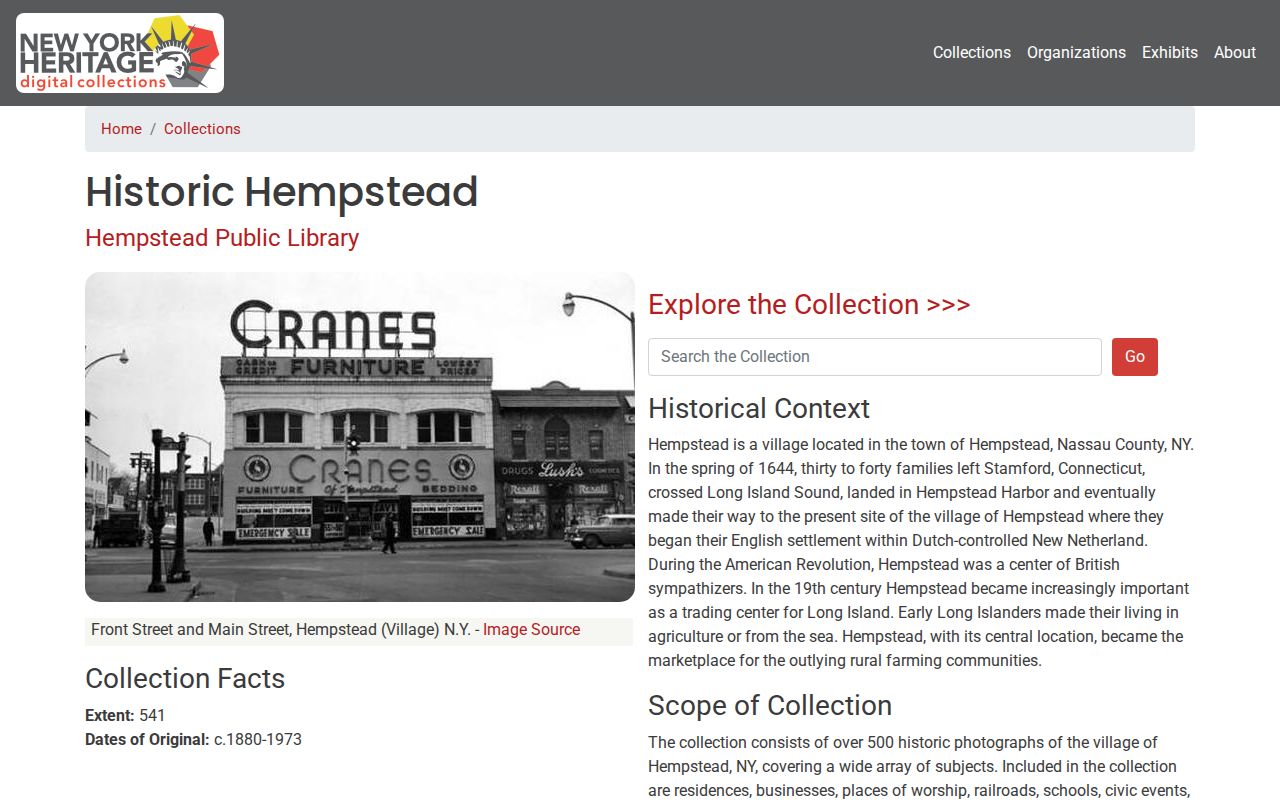
The collection view is a useful reminder to preserve a source caption and image date alongside any directory transcription. That small record keeps a house-history or family-history note tied to the item actually reviewed.
Hempstead Directory Dates on Film
The State Library's catalog supplies four reliable Hempstead directory checkpoints. They are valuable because they let a researcher compare a surname, business, or address across changes in the early twentieth century without inventing a continuous run. Start at the closest listed edition and search both the name form and the address form when the volume permits it. If a scan is faint or an index misses a name, a manual page review may still be necessary.
- 1901/02: earliest Hempstead film year identified in the State Library holdings.
- 1903/04: a second early checkpoint for a quick comparison.
- 1915/16: a later pre-1920s directory point.
- 1930/31: the latest Hempstead film year specifically listed in the research.
The New York State Library directory-holdings page is the source for those dates. It identifies holdings, not a complete digitized name index, so note the edition before copying any evidence into a family file.
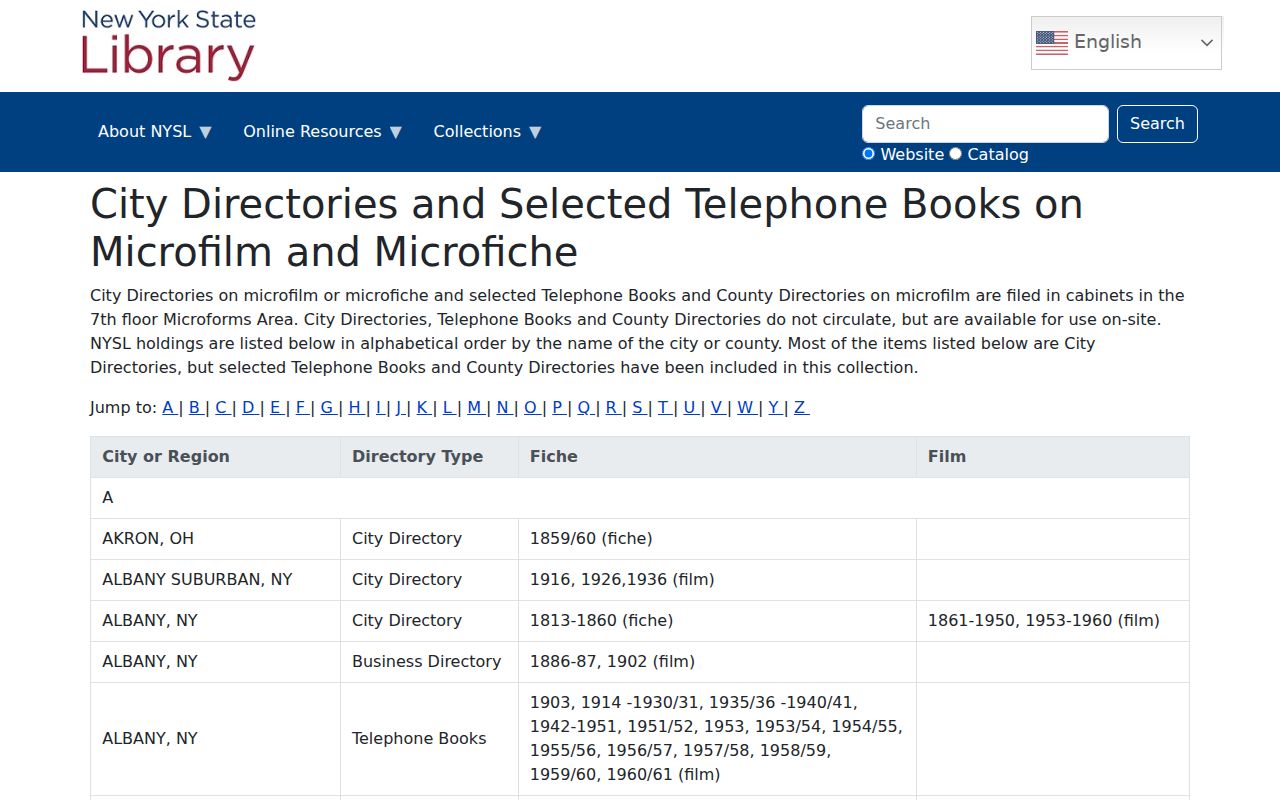
The Hempstead holdings display supports a focused request for an exact film year instead of a vague request for all Hempstead records.
Note: Directory gaps, index errors, and shifting street names require a second source before drawing a firm historical conclusion.
Read a Hempstead Directory Entry
A Hempstead directory entry should be copied as printed, including initials and abbreviations. For the Hempstead runs identified in the research, the expected evidence is a person or business name, an occupation or business description, a street or residence, the directory year, and sometimes a household or business classification. Do not add a spouse, ownership status, or meaning for an abbreviation unless that exact volume shows it. The printed entry connects a name or business with a place during one publication year. It does not establish a current address, a full-year residence, or property ownership.
| Name or business | Copy the spelling, initials, and ordering exactly as the directory prints them. |
|---|---|
| Occupation or business | Record the stated work or business description without expanding an unclear abbreviation. |
| Street or residence | Preserve the house number, street form, and any residence notation. |
| Directory year | Identify the edition, because the association is tied to that publication period. |
| Classification | Note a household or business classification only when the edition supplies one. |
- Criss-cross directory
- A directory arranged by street or address rather than mainly by name. Confirm that a particular Hempstead volume includes this section before relying on it.
- Householder index
- A name-oriented index that can point to a household entry. Its presence and coverage vary by edition.
- Abbreviation key
- The explanatory list often printed near the front of a directory. Photograph or transcribe it before interpreting shortened words.
Hempstead Directory Companions
When Hempstead film years leave a gap, use sources that answer a narrower question. The library's yearbook collection can connect a name to a class, activity, school year, or local context. The Hempstead digitized years are browseable, although the research did not establish a complete year-by-year inventory. The Historic Hempstead photographs can test streetscape details, and the Lain & Healy holdings can add business-directory coverage. Each has a different purpose, so keep the edition, page, image identifier, or catalog record with the observation.
The Nassau County Historical Society is another regional holding for artifacts, documents, books, writings, and historic-site material. Contact it before planning a visit or asking for a search. It can broaden a local investigation, but it does not turn an uncertain directory result into a confirmed identity.
For Hempstead researchers, regional collections are especially helpful when a directory points to a business, institution, or streetscape that needs historical context.
Hempstead Directory Collection Access
Hempstead collection access is part of the research record. Hempstead Public Library special collections are appointment-only and non-circulating, so an item may require a reference-desk conversation rather than a simple online search. The library's local-history material supports early Long Island and Hempstead resident research, while its database information identifies library-based access to census, immigration, and passenger-list resources. Confirm the current conditions before travel, especially when a project depends on one directory, yearbook, or local-history volume.
For collection scope and access details, use the Hempstead Public Library collections page.
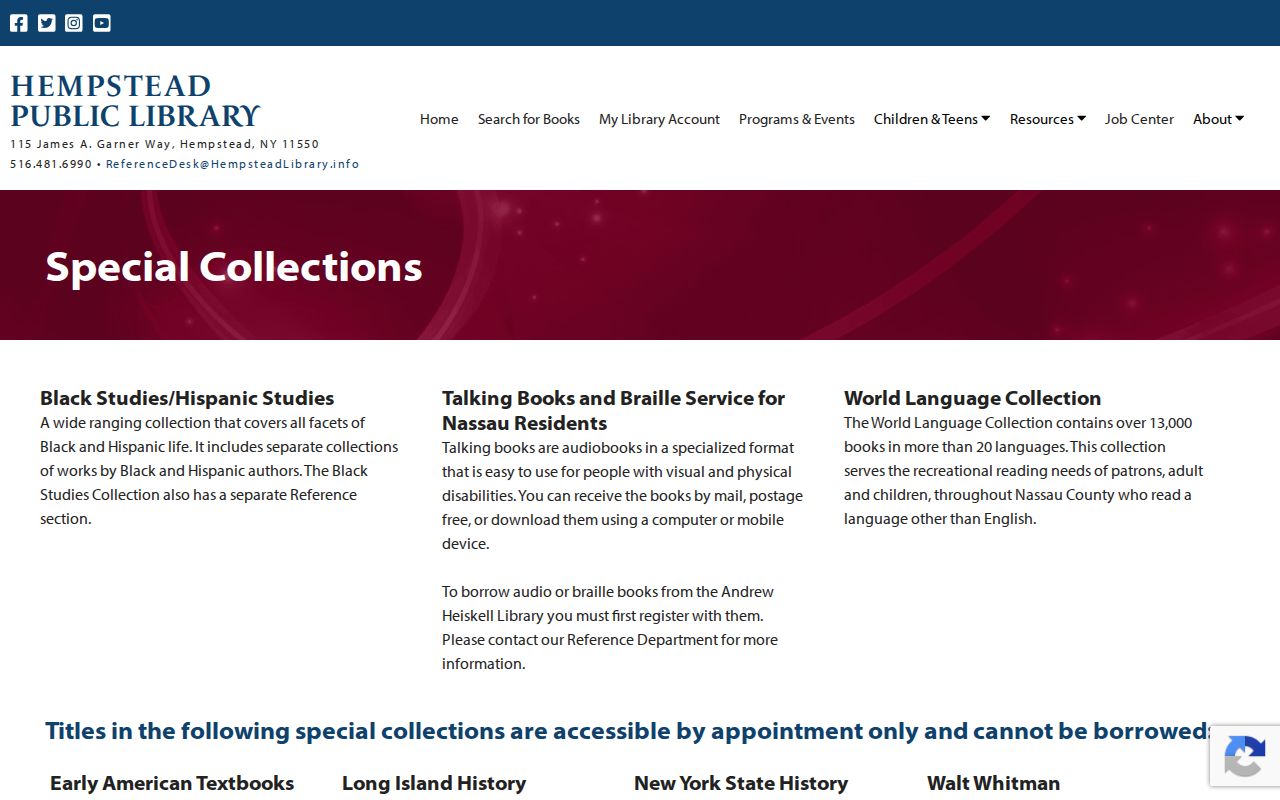
The Hempstead collection information helps separate a digitized finding aid from an item that must be consulted under special-collection rules.
Hempstead Archives Are Not All Online
Historical Hempstead research often crosses several custodians. The Town Clerk describes records reaching back to 1644, including ordinances, maps, assessment rolls, petitions, budgets, and inactive historical files. That does not make every old Hempstead item a Village record. The incorporated Village, the larger Town, the postal city, and the County can use the same place name while keeping different records. Check which government created the record before treating a result as Village evidence.
For Hempstead historical work, the County's historic official-record repository covers 1840-1982, while County guidance also notes an electronic land database since July 1992. Those time ranges overlap imperfectly and serve different systems. The historic repository, the Town Clerk, and the New York State Archives each offer a different fallback when a directory does not answer the question.
Note: An online no-hit means only that the item was not located in that source and date range.
Trace Hempstead Directory Households
A Hempstead household trail works best when each step stays tied to a year. Begin with the closest listed directory edition, then move backward or forward to the next available one. Record every spelling, initial, address form, occupation, and classification without smoothing differences away. Pair the directory year with an appropriate census, yearbook, photograph, deed, tax map, or eligible vital-record route only after confirming the right jurisdiction. For a modern parcel question, the Hempstead by-street directory has the separate address-based workflow.
- Locate the earliest known appearance in a dated directory or cataloged business volume.
- Compare the next available Hempstead edition, even if several years separate the two.
- Write down moves, name variants, occupation changes, and any difference between a home and business address.
- Use a yearbook, photograph collection, map, or census source to corroborate only the specific point being tested.
- Mark an absence as “not found in this edition,” then check alternate spellings, another custodian, or a nearby year.
In Hempstead, a disappearance can reflect a move, death, changed spelling, omission, or a scope change in the book. It is not a conclusion by itself. Preserve the volume title, publication year, page, repository, and access date so another researcher can repeat the search.
Hempstead Names Need a Jurisdiction
“Hempstead” can identify the incorporated Village, the larger Town, a postal city, or a historical locality. That distinction matters when a directory address leads to a government file. The Village Clerk and Village Historian are leads for Village-created material, while the Town Clerk's archive relates to Town-created records. County land records are held through the Nassau County Clerk, and state-created collections are routed through the State Archives. A precise source note should identify the volume, the locality printed in it, the creating agency when known, and the date consulted.
The Hempstead Public Library's local collection, Nassau County Historical Society, and Hofstra's Long Island Studies Institute can add books, maps, newspapers, photographs, census material, manuscripts, and regional context. Their material is useful for family, former-classmate, estate, and historic-house research when it is compared carefully rather than used as a stand-alone claim.
Hofstra's Long Island Studies Institute is in Axinn Library Room 032. The research lists weekday hours of 9 to 4:45, phone 516-463-6411, and an appointment recommendation or requirement for non-Hofstra researchers. That access route is valuable when a library film listing or a local catalog does not supply the needed regional context.
Note: Preserve historical spellings and postal labels as printed, then verify the related civil jurisdiction with the responsible office.