
Hempstead Previous Residents Sources
Different sources cover different slices of a Hempstead address history. A deed can show a recorded transfer, an address directory can show a printed association for one edition, and a map or photograph can provide context. Keep the source, date, and access limitation beside each finding. The era table below is a starting order, not a promise that every address appears in every source.
| Source | Years it covers | Where held | What it can show |
|---|---|---|---|
| Historic Nassau official-record repository | 1840–1982 | Nassau historic repository | Deed records, direct and reverse indexes, plats, and document images |
| Current Nassau land records | Electronic database since July 1992 | Nassau County Clerk / current Official Records | Recorded instruments and current index route |
| Clerk-assisted gap check | 1983–1991 | Nassau County Clerk | Records beyond the historic interface cutoff |
| Hempstead directory microfilm | 1901/02, 1903/04, 1915/16, 1930/31 | New York State Library | Printed name, address, business, and edition-year associations |
| Library local-history materials | Dates vary by item | Hempstead Public Library | Yearbooks, photographs, local books, and special collections |
Start with the period you can date. For a late twentieth-century transfer, the Clerk index comes first. For an early household question, a directory edition or library source may be the better first lead. The result is stronger when a land record and a separate dated historical source agree without being treated as the same proof.
Start With a Hempstead Address
Begin the backward trail with the modern address in the Nassau Land Records Viewer. Record the parcel address, Village or Town label, SBL, map location, and roll year. LRV is useful for parcel context, tax maps, assessment details, sales, and archived cards. The captured public result did not show an owner or mailing field, so the viewer should not be treated as a full ownership or occupancy answer.
The normal sequence is address, then LRV, then AROW or the parcel map if needed, then the Clerk index and document image. AROW requires a street and ZIP, accepts an optional house number and SBL, and uses a city postal name. Use the exact postal form for searching, but retain the municipal result as well. Hempstead can describe a Village, Town, postal city, or historical locality, and those labels can send an address history to different custodians.
Historic Hempstead Index Books
The historic Nassau repository is a valuable route for records from 1840 through 1982. Its controls include document name or book number, record type, document-text searching, year limits, and an option to search through document text. It also offers Official Records, Deed Records, 1840–1934 index books, Direct/Reverse Index Books, and historic plat-book choices. Use both the name route and the index direction that fits the transfer.
OCR is helpful but imperfect. Handwriting can be missed or read differently from the image, so an empty text result does not settle a house-history question. Try a spelling variation, a narrower year range, an index-book route, or the other party direction before recording a no-hit.
The historic official-record repository provides the deed and index-book options used in this older Hempstead research.
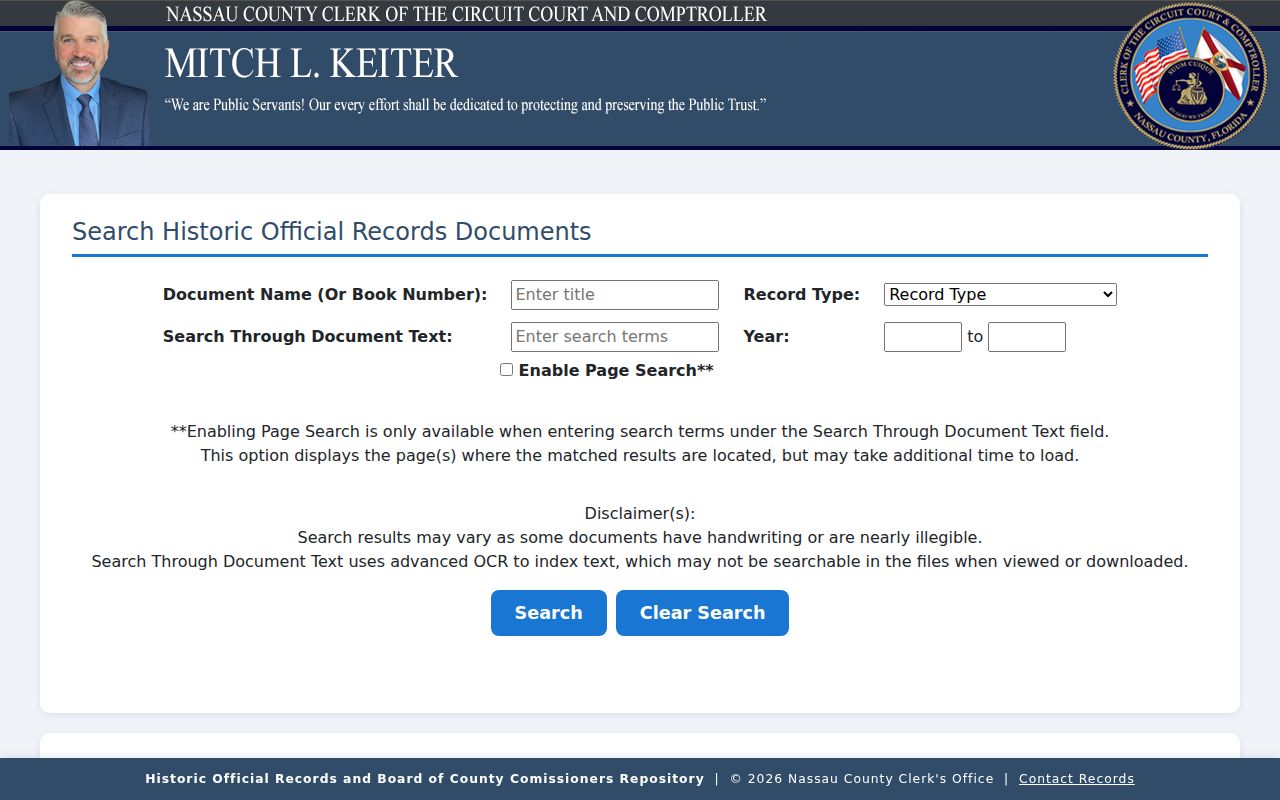
The index is a route to a source document, not a substitute for it. Record the page or image reviewed as well as the search phrase and date.
Trace Hempstead Previous Residents Deeds
A recorded chain is built backward one instrument at a time. It is evidence about land transfers, not an automatic list of past residents. The County Clerk owns the official real-property index, and the document image is the item to read when the connection matters. Use the parcel SBL as a cross-check, since assessor and Clerk formatting can differ.
- Confirm the modern Hempstead address and SBL in LRV, then note the Village or Town and map position.
- Choose the current Official Records route or the historic repository according to the likely document period.
- Locate a recorded transfer and read its image for the named parties, recording date, instrument or book reference, and legal description.
- Search the earlier party in the grantee direction to find the prior acquisition, then repeat the image review for each earlier link.
- When the search crosses 1982 or the July 1992 electronic boundary, check the Clerk’s applicable route instead of assuming the same interface covers the gap.
- Grantor
- The party transferring an interest in a recorded instrument.
- Grantee
- The party receiving that recorded interest.
- Chain of title
- The documented sequence of recorded transfers for a parcel or legal description.
- Legal description
- The land description in an instrument. It is often more stable than a street address when older records are compared.
Hempstead Previous Residents Directories
Land records answer a title question. Directories and local collections answer a different question: whether a name or business was printed with an address in a particular edition. The New York State Library lists Hempstead microfilm for 1901/02, 1903/04, 1915/16, and 1930/31. Hempstead Public Library also offers local-history materials, browseable yearbooks, and special collections by appointment. The Hempstead city directory collections provide the fuller shelf and access details.
- Select the directory edition closest to the dated deed, map, photograph, or other event.
- Transcribe the entry as printed, including abbreviations, address, name or business form, and edition year.
- Compare nearby editions and library-held census resources only as separate, dated evidence.
- Keep a directory association distinct from a transfer of title or a present-day conclusion.
Hempstead Public Library identifies Ancestry Library access from the library and describes a large census, immigration, and passenger-list collection. Access conditions can require a card or use of an on-site computer, so confirm the live terms before relying on it. Yearbooks and photographs can add school or streetscape context, but neither should be used to publish a current private location. A historical household link remains strongest when its edition, page or image identifier, and year are preserved.
Hempstead House-History Sources
The Library of Congress house-history method combines deeds, directories, maps, photographs, plans, and local archives. That is a good fit for Hempstead because no single index carries the whole story. Build a timeline from sources that can be dated, and record what each source proves rather than making one record do every task. The sequence can also show when the record trail has a gap, which is better than creating a link without an underlying source.

That source chain keeps a deed, directory, map, and image in their separate evidentiary roles. It also makes a gap visible rather than turning it into a guess.
For Hempstead-specific context, the Hempstead Public Library collections include Long Island and New York history materials. Special collections are appointment-only and non-circulating, so a reference-desk contact can be more useful than repeated online searches when a local item is not digitized.
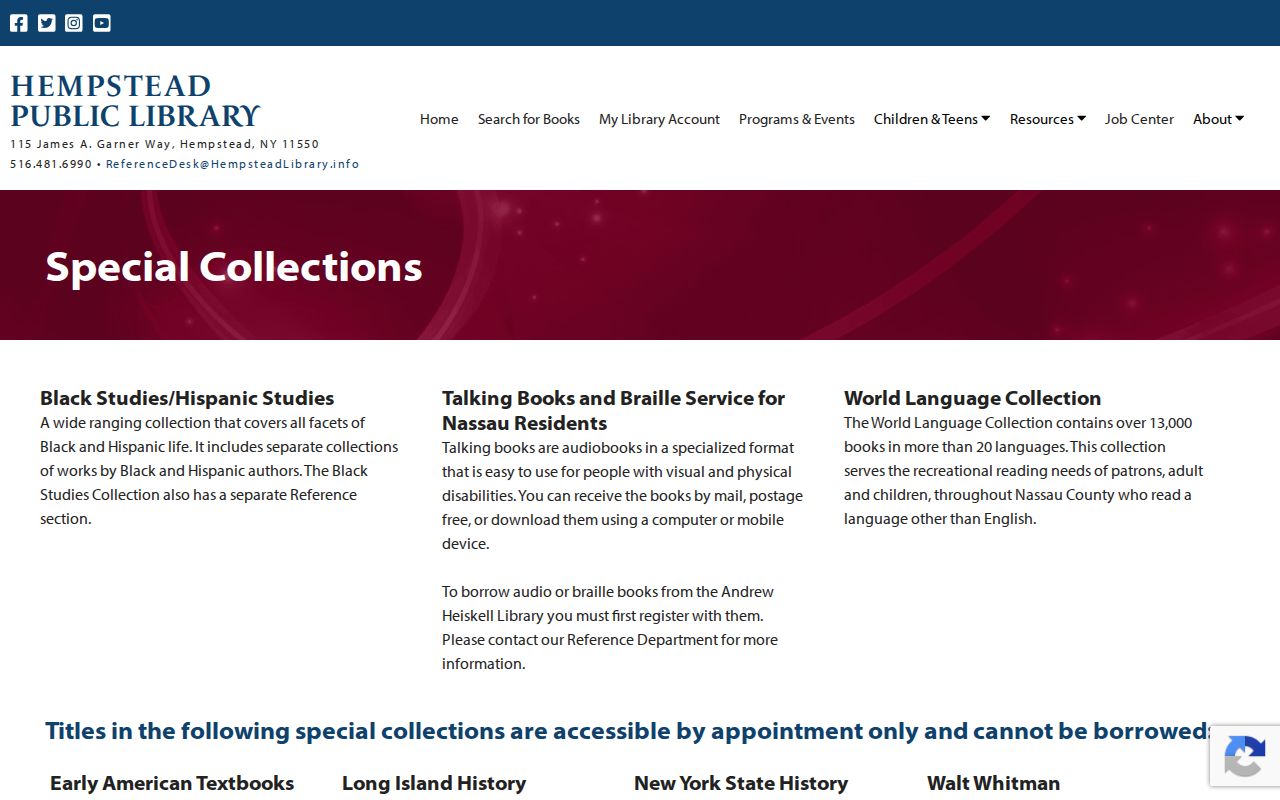
Library holdings can test whether the building, street, or surrounding institutions changed between recorded transfers. They do not convert a caption or directory line into title proof.
Hempstead Address No-Hit Checks
A no-hit should be written as “not located in this source and date range,” not as proof that no record exists. Check the address form, postal city, Village or Town choice, SBL formatting, direct and reverse index directions, spelling variants, year range, and image availability. If the online route stops, move to the County Clerk, library microfilm, archive finding aids, or the creating municipal office.
Street names can change and directory editions can contain omissions. The research did not establish a specific Hempstead street-renumbering date for this address work, so do not invent one. Compare historical maps, printed editions, and recorded legal descriptions before deciding that two differently written addresses refer to the same place.
Note: A source limitation is part of a sound house-history conclusion and should remain in the research note beside the result.
Hempstead Previous Residents Eras
Record-era check. Nassau County was established in 1899, but the search interfaces do not divide history at one clean line. The historic repository advertises records from 1840 to 1982. The County Clerk guide separately describes an electronic land database since July 1992, and the County Clerk remains the official current custodian. Those dates describe different systems, not a guarantee of equal coverage.
Use the 1840–1982 repository for the historic interface, then follow the Clerk’s current-record route where it applies. For the 1983–1991 interval, ask the Clerk for the appropriate record path. A cross-boundary trail needs a source check on both sides of the interface change.
Hempstead Previous Residents Limits
Past-resident research must keep ownership and residence separate. A deed, tax map, account, or parcel image cannot by itself show who occupied a property at a given time. A directory entry can show a printed address association for its edition but not continuous presence. Some court and vital records are restricted, and access rules may limit what can be requested or shared.
Lawful use. Use Hempstead house-history records for personal, lawful research, family history, estate or heir work, and local history. Do not use a past address trail to stalk, harass, intimidate, or harm anyone, and do not publish protected details.
Hempstead House Context Sources
Historic Hempstead photographs, library books, the Nassau County Historical Society, and archive finding aids can place a building or street in local context. The Town Clerk describes records reaching back to 1644, but Town custody does not make every old Hempstead item a Village record. Confirm which government created the record before treating an archive lead as Village evidence.
The best final entry names each source and year, separates a recorded transfer from a historical address association, and leaves unresolved points unresolved. Keep the exact URL or collection name, search wording, jurisdiction, identifier, and image status with the research log. That makes the trail useful to the next researcher without creating claims the records cannot support.